
Diversified Technique Newport Beach
Where this technique fits
- Joints that have lost movement in a specific direction
- Spine, and also shoulders, wrists, hips, knees and ankles
- Patients comfortable with a hands-on adjustment
- Restrictions that need a direct approach
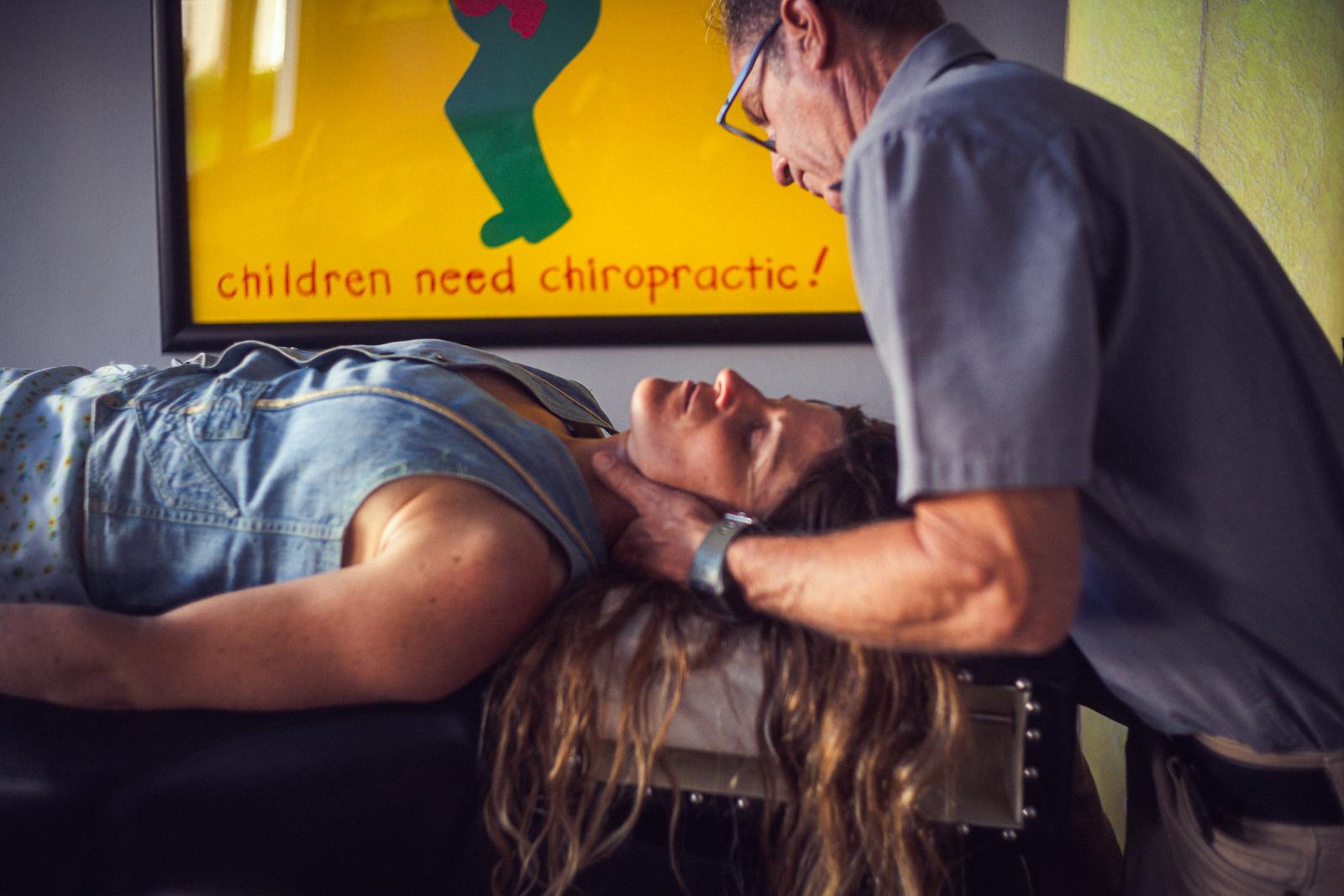
If you have had chiropractic before, this is probably what you had. Diversified is the most widely taught manual technique in the profession, and for a lot of straightforward joint restrictions it remains the most direct way to restore movement.
What Diversified Technique Newport Beach patients can expect
The adjustment is a hands-on thrust: short, quick, and shallow. The doctor takes a contact on the segment that is not moving, positions you so that the surrounding joints are taken out of the way, and applies a controlled force through a specific line. The whole thing lasts a fraction of a second.
Diversified Technique Newport Beach patients receive is not limited to the spine. The same principles apply to shoulders, wrists, hips, knees and ankles, and a stubborn extremity joint often responds well once the spine is behaving.
Why the speed matters
A fast thrust travels through the joint before the surrounding muscle has time to brace against it. A slow push, by contrast, gives the muscle notice, and the guarding it produces is exactly what you are trying to get past. That is why the technique feels abrupt rather than forceful — the speed is doing the work, not the pressure.
Where it fits in a plan
We use it where the examination shows a joint that has lost motion in a specific direction and where you are comfortable with a manual approach. It is frequently combined with soft-tissue work, since the muscles around a long-restricted joint will otherwise pull it straight back.
If it is not right for you
Some people simply do not like the sensation, and some conditions make a manual thrust unwise — reduced bone density, recent fracture, certain inflammatory conditions, or a very acute injury. Say so, or let the examination say so, and we will use an instrument or a drop-table method instead.
Comfort and after-effects
Expect brief pressure and often a pop, which is gas releasing inside the joint capsule. Mild soreness for a day afterwards is common, particularly after a first adjustment, and it is the same category of ache as a new exercise rather than a sign something went wrong.