
Herniated Disc Treatment Newport Beach
What we establish first
- Which level is involved
- Compression or irritation
- How the symptoms behave with movement
- Whether conservative care is appropriate at all
A disc sits between two vertebrae and works as a spacer and a shock absorber. When the outer wall weakens, the softer centre can push outward — a bulge — and where it breaches the wall, a herniation. Either can press on a nerve root, which is when a back problem becomes a leg problem.
What Herniated Disc Treatment Newport Beach involves
Establishing which level is involved and whether the nerve is genuinely compressed or simply irritated. Those look similar to the patient and are quite different in how they behave. We use the pattern of symptoms, movement testing that loads the disc specifically, and a neurological examination.
The treatment
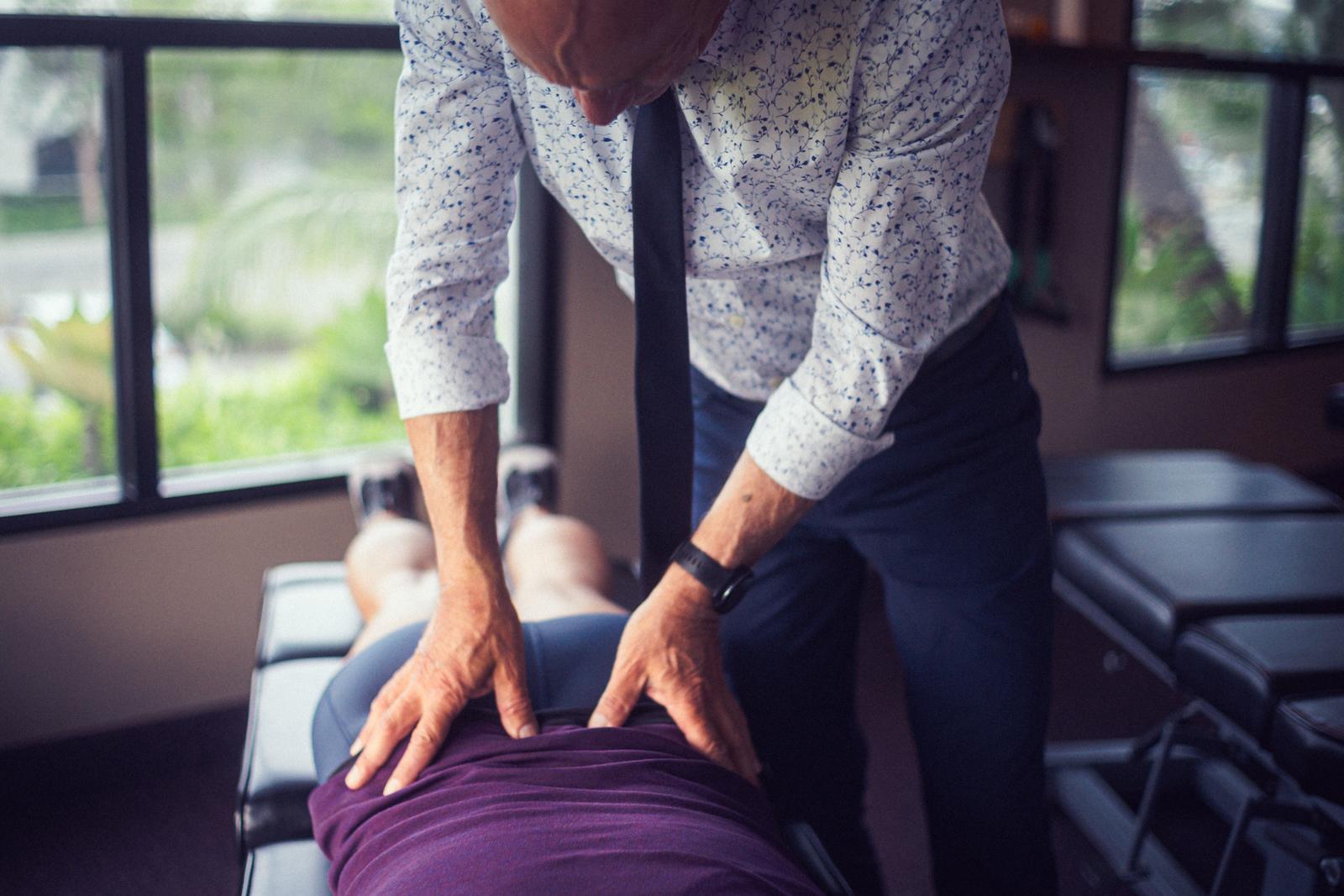
Usually flexion-distraction or decompression to unload the segment, adjusting above and below where movement has been lost, and specific loading as the tissue tolerates it. Herniated Disc Treatment Newport Beach patients receive here is a course rather than a single visit, because discs do not settle quickly.
Timelines and surgery
Most disc herniations improve without surgery. That is well established, and it is worth knowing before anyone books an operation. It is also slow — think weeks to months, not days, and expect the leg symptoms to improve before the back does.
What we do not do is promise that a disc goes back in. That phrase is used loosely in this field and it is not an accurate description of what happens.
When surgery is the right answer
Progressive weakness, symptoms that do not respond to a fair course of conservative care, or any sign of cauda equina — saddle numbness, bladder or bowel changes — which is an emergency. We will tell you plainly if we think you have reached that point.
What you can do while it settles
Keep moving within what the leg will tolerate, avoid loaded bending and prolonged sitting in the early weeks, and do not test it repeatedly to see whether it still hurts. Discs are slow and irritable, and repeatedly provoking one is the most common reason a recovery stalls. Walking is usually the safest thing to do more of.