
Tailbone Pain Treatment Newport Beach
What we look at
- How the coccyx and sacrum move
- The low back and pelvic floor
- Your actual seating, in detail
- Whether trauma needs imaging first
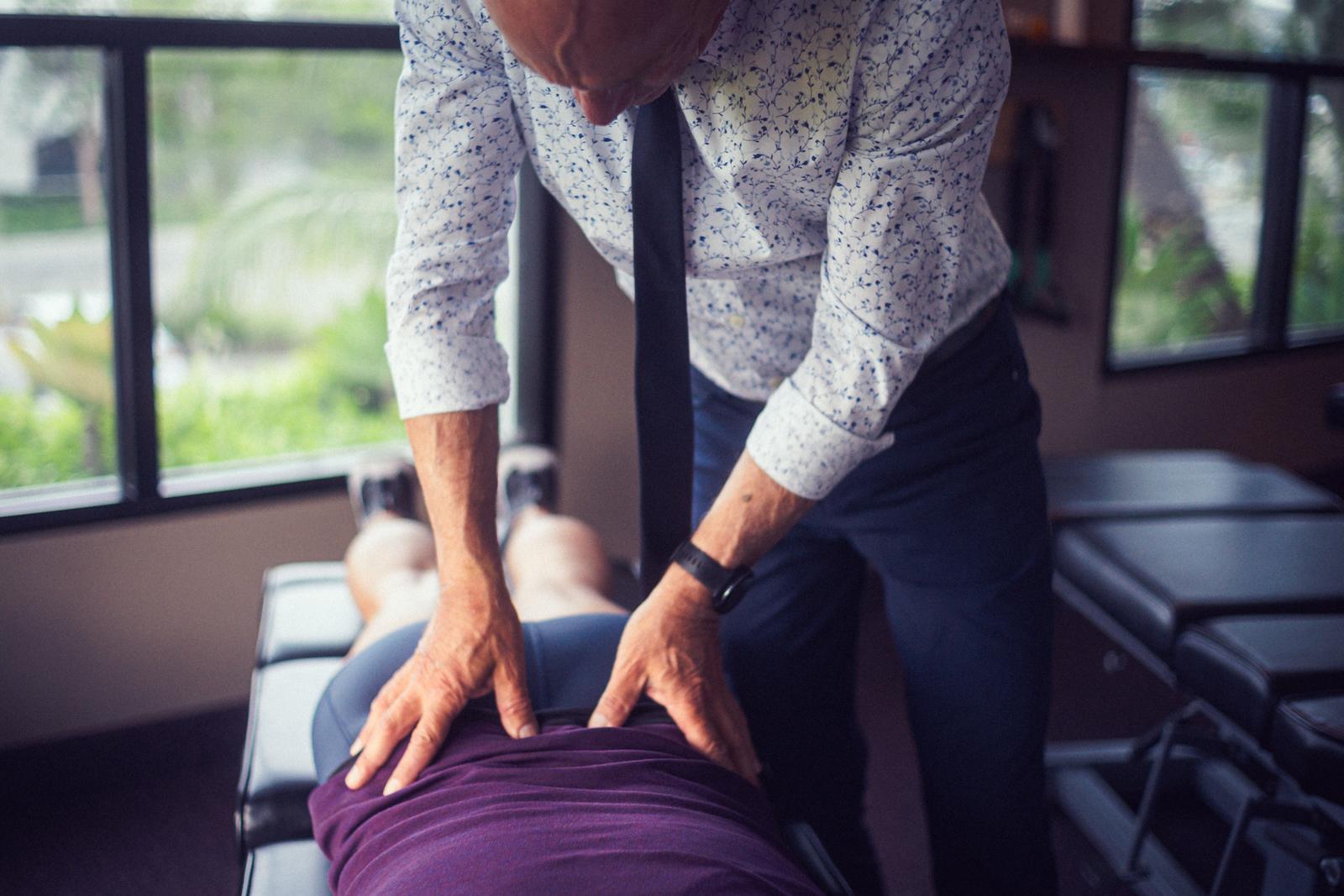
Coccydynia is pain at the very base of the spine, usually worse sitting, worse still on a hard surface, and often sharpest in the moment of standing up. It follows a fall onto the base of the spine, childbirth, or long periods of sitting badly — and sometimes appears with no clear cause.
How Tailbone Pain Treatment Newport Beach works
Examination of how the coccyx and sacrum move, the pelvic floor and surrounding muscle, and the low back, which is frequently involved. Tailbone Pain Treatment Newport Beach patients here get gentle mobilisation and soft-tissue work rather than any forceful technique.
Why it lingers
Because sitting is unavoidable for most people, so the tissue is provoked repeatedly all day. That is the main reason coccydynia becomes chronic, and it is why the seating advice matters at least as much as the treatment.
What actually helps with sitting
A wedge cushion with a cut-out at the back so the coccyx does not bear weight, sitting slightly leaning forward rather than reclined, and standing up regularly. Those three changes are frequently the difference between slow improvement and none.
Sitting, which is the whole problem
Most coccydynia settles over weeks to a few months with conservative care and sensible seating. It is slower than people expect because the provocation is constant, and progress is best judged by how long you can sit rather than by the pain at its worst.
When to seek more
Pain following significant trauma warrants imaging to exclude a fracture. Pain with any change in bowel habit, unexplained weight loss, or a lump needs medical assessment first. Persistent pain that has not shifted after a proper course is worth a specialist opinion, as injections help some people.