
Whiplash Treatment Newport Beach
What we examine
- Neck movement in every direction
- Joint play at each level
- Jaw, mid-back and shoulders
- Red flags that belong elsewhere
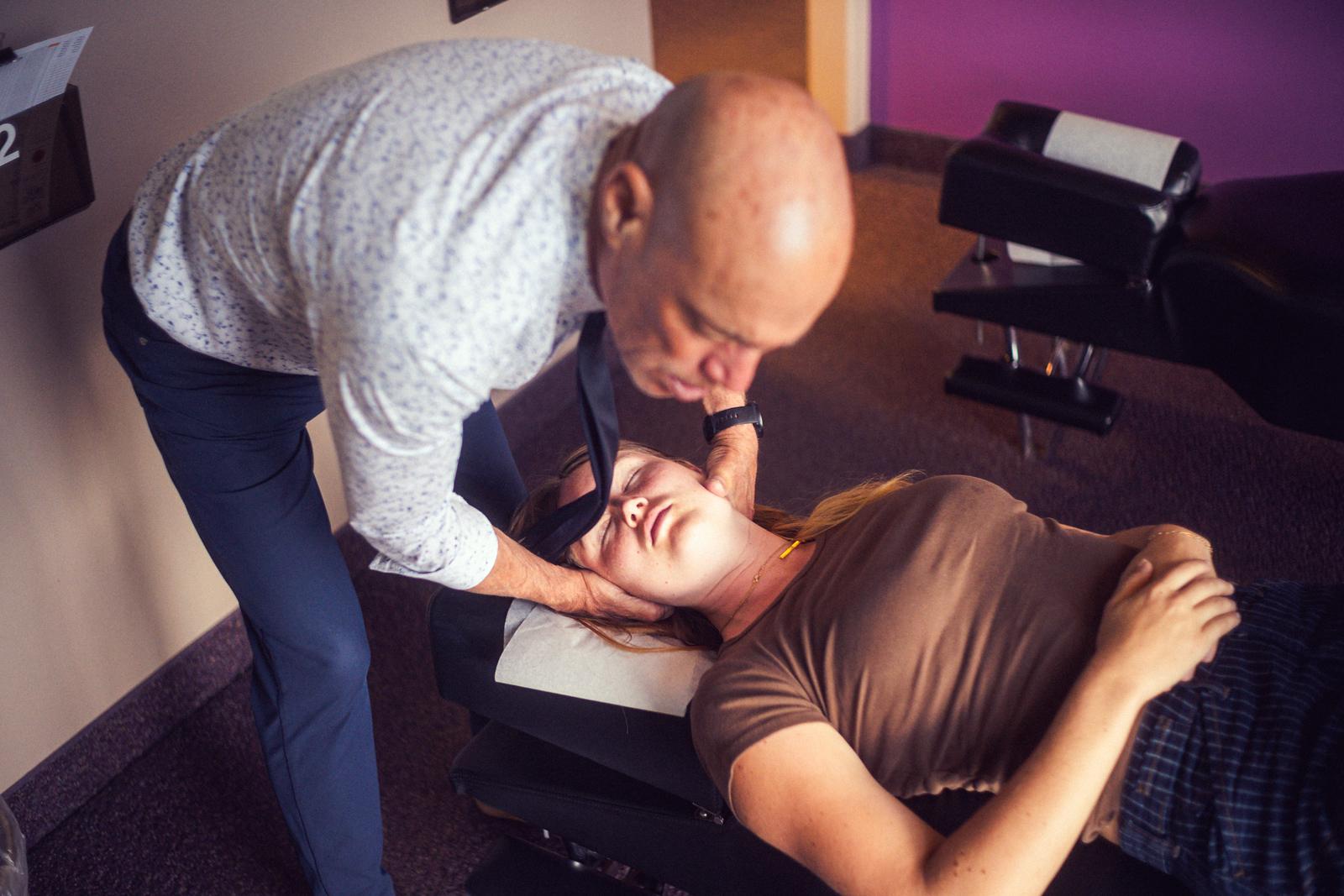
Whiplash describes the rapid back-and-forth movement of the neck in a collision and the tissue injury that follows. It is a soft-tissue and joint problem rather than a bone one in most cases, which is why an X-ray showing nothing does not mean nothing happened.
How Whiplash Treatment Newport Beach starts
With a screen for the things that do not belong here — fracture, significant neurological signs, concussion. Then a careful examination of neck movement in every direction, joint play at each level, and the muscles that have gone into protective spasm. We also check the jaw, mid-back and shoulders, because the forces travel.
Treatment, and the timing of it
Early gentle movement beats rest. Tissue immobilised while it heals lays down disorganised scar, and a neck held still for six weeks is a harder problem than one moved appropriately from the start. Whiplash Treatment Newport Beach patients receive here is graded — settle the spasm, restore movement, then load.
Why it often feels worse on day three
Adrenaline and inflammation both have a delay. Most people feel less than they expect at the roadside and considerably more by day two or three, and that is the normal pattern rather than a sign of deterioration. It is also why people talk themselves out of being examined.
Documentation
We record the examination properly — what you reported, what we found, what we treated and how it changed. If there is a claim, that contemporaneous record is what it runs on, and a long unexplained gap before the first examination is the thing insurers question hardest.
What recovery usually looks like
Most whiplash settles substantially over six to twelve weeks with appropriate care, and the majority of people recover fully. A minority have symptoms that persist longer, and the strongest predictors of that are not the severity of the collision but how early treatment started and how much the neck was allowed to stiffen in the first fortnight. That is the part within anyone's control, which is why we push for early examination rather than waiting to see.